Cannabis Terpenes: What Are They and Why Do They Matter?
Cannabis terpenes have a recognizable smell, but the scent of one product can be completely different from another. Some cannabis smells like fresh pine or citrus, while other varieties have earthy, floral, peppery, or fruity notes. These differences have a lot to do with terpenes, naturally occurring compounds that contribute to the plant’s aroma and flavor.
Terpenes are found in many plants besides cannabis. They give lavender its floral scent, help create the familiar smell of citrus peels, and contribute to the fragrance of pine trees. In cannabis, these compounds are part of what makes each product’s chemical profile distinctive.
For Pennsylvania medical marijuana patients, learning about terpenes can provide another way to compare products beyond THC and CBD percentages. However, a particular aroma or terpene profile does not guarantee a specific medical effect. Research is still developing, and individual responses to cannabis can vary.
What Are Cannabis Terpenes?
Cannabis terpenes are naturally occurring aromatic compounds produced by the cannabis plant. They contribute to its scent and flavor and may also play biological roles that researchers are continuing to investigate.
Cannabis produces a complex mixture of chemical compounds, including cannabinoids such as THC and CBD, terpenes, and flavonoids. Each group has its own characteristics.
Terpenes are particularly important to the plant’s aroma. Depending on the variety and its growing conditions, cannabis may contain different combinations and concentrations of these compounds. Researchers have identified more than 150 terpenes in cannabis, although not every plant or product contains the same profile.
A scientific review published in Molecules examines the potential pharmacological properties of cannabis-derived terpenes, including myrcene, limonene, pinene, linalool, and caryophyllene. The review is available through PubMed Central’s research archive.
It is important to separate what researchers have observed in laboratory experiments from what has been demonstrated in people. A terpene may show an interesting biological effect in a laboratory setting without proving that a cannabis product containing it will produce the same result.
How Do Cannabis Terpenes Affect Smell and Flavor?
The aroma of cannabis is not determined by THC alone. Terpenes contribute many of the scent and flavor notes that distinguish one product from another.
For example, a cannabis product with a noticeable citrus aroma may contain limonene, while a pine-like scent may be associated with pinene. Products with earthy or herbal aromas may contain myrcene, among other aromatic compounds.
These associations are useful clues, but scent is not a reliable way to identify the exact chemical composition of a product. Multiple terpenes can contribute to the same aroma, and their concentrations differ between samples.
Terpene content can also change during cultivation, processing, storage, and exposure to heat or air. Because these compounds can be volatile, poor storage conditions may reduce the intensity of a product’s original aroma.
For patients comparing medical marijuana products in Pennsylvania, a product’s laboratory results provide more specific information than smell alone. When available, a certificate of analysis or product label can help identify the terpenes detected and their reported concentrations.
Common Cannabis Terpenes and Their Characteristics
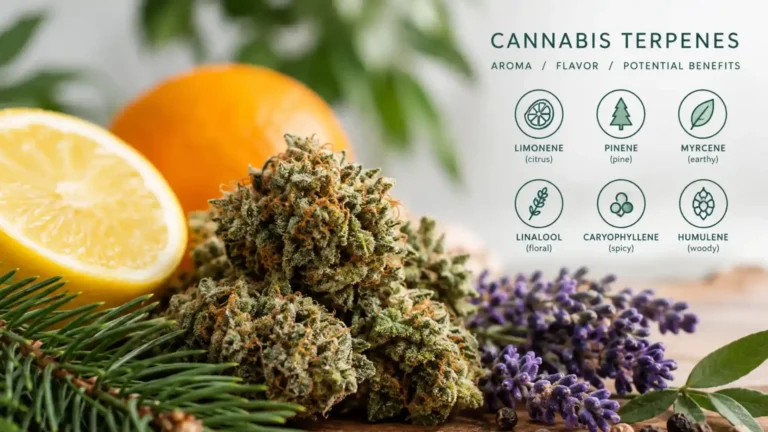
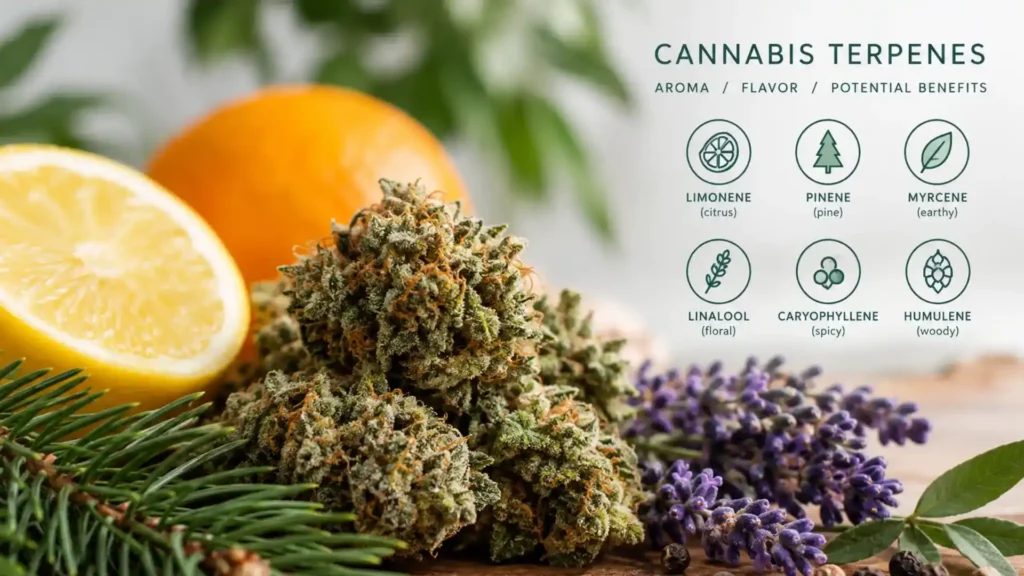
Different cannabis products may contain different terpene combinations. The following are among the best-known cannabis terpenes and the characteristics commonly associated with them.
Myrcene: Earthy and Herbal
Myrcene is found in cannabis as well as plants such as hops and thyme. It is commonly associated with earthy, musky, and herbal aromas.
Myrcene is frequently discussed in cannabis literature because researchers are investigating its possible biological activity. Some early findings involve anti-inflammatory and pain-related mechanisms, but these findings do not establish that a myrcene-rich cannabis product will relieve a particular symptom.
Limonene: Citrus-Like and Bright
Limonene is associated with the fresh scent of lemons, oranges, and other citrus fruits. It occurs in citrus peels and can also appear in cannabis terpene profiles.
Researchers have investigated limonene for several potential biological effects. However, the presence of limonene in a cannabis product does not establish that the product will improve mood, reduce anxiety, or provide another specific therapeutic benefit.
Pinene: Fresh Pine and Evergreen
Pinene is a terpene found in pine trees, rosemary, and other plants. In cannabis, it may contribute a sharp, woody, or evergreen scent.
Laboratory research has explored pinene’s biological properties, but claims that pinene reliably improves memory, increases alertness, or counteracts THC-related effects need stronger clinical evidence.
Linalool: Floral and Lavender-Like
Linalool is responsible for much of the characteristic floral aroma associated with lavender. It is also found in several other aromatic plants and can occur in cannabis.
Linalool has attracted scientific interest because of research into its possible calming and other biological properties. Still, results from studies of isolated compounds or essential oils cannot automatically be applied to cannabis products.
Beta-Caryophyllene: Peppery and Spicy
Beta-caryophyllene is known for its peppery, woody, and spicy aroma. It is found in black pepper, cloves, and other plants.
This terpene is especially interesting to researchers because it interacts with the CB2 cannabinoid receptor in experimental systems. That distinguishes it from many other terpenes, although it does not mean that a product containing beta-caryophyllene will produce a predictable medical outcome.
Humulene: Woody and Hoppy
Humulene contributes earthy, woody, and hoppy notes. It is also found in hops, a plant used in brewing beer.
Scientists have investigated humulene for possible biological activity, including anti-inflammatory effects in experimental settings. More research is needed to determine what those findings mean for people using cannabis products.
These descriptions can help patients recognize common aromatic profiles, but they should not be treated as a list of proven medical benefits. Terpene concentrations, other plant compounds, product formulation, and individual responses all matter.
Cannabis Terpenes vs. THC and CBD: What’s the Difference?
Terpenes, THC, and CBD are all compounds associated with cannabis, but they are not interchangeable.
THC (tetrahydrocannabinol) is the primary intoxicating cannabinoid in cannabis. It is responsible for much of the plant’s characteristic intoxicating effect.
CBD (cannabidiol) is another major cannabinoid. It does not produce the same intoxicating effects as THC, although CBD-containing products can still have side effects and may interact with certain medications.
Terpenes are best known for contributing aroma and flavor. They are also being studied for possible biological effects and interactions with other cannabis compounds.
A product’s terpene profile therefore tells a different part of the story than its THC or CBD percentage. Two products with similar THC concentrations can have different aromatic profiles and overall chemical compositions.
Neither a high terpene concentration nor a high THC percentage automatically means a product is a better choice. Patients should consider their individual needs, prior experiences, product formulation, and guidance from a qualified healthcare professional.
Do Cannabis Terpenes Have Medical Benefits?
Researchers are investigating whether certain cannabis terpenes may have anti-inflammatory, pain-related, or other biological effects. Some findings are promising, but the strength of the evidence varies considerably.
A review of cannabis-derived terpenes published in the scientific literature discusses preclinical findings involving myrcene, limonene, pinene, linalool, and other compounds. Much of the research involves laboratory experiments or animal studies rather than large, well-controlled human clinical trials.
That distinction matters. A compound showing activity in a laboratory does not necessarily produce a meaningful or safe benefit when consumed as part of a cannabis product. The amount absorbed by the body, the route of administration, the presence of other compounds, and the dose can all affect the outcome.
The National Academies of Sciences’ review of cannabis and cannabinoids also highlights the need for stronger evidence to establish the health effects of cannabis and its constituents.
For Pennsylvania medical marijuana patients, terpene information may be useful when comparing product composition, but it should not replace medical advice. No single terpene profile is proven to work best for every condition or every patient.
What Is the Entourage Effect in Cannabis?
The entourage effect is the theory that cannabis compounds, including cannabinoids and terpenes, may interact in ways that influence their combined effects.
The idea has received considerable attention because cannabis contains many compounds rather than a single active ingredient. Researchers have investigated whether combinations of these compounds may behave differently from isolated substances.
However, the entourage effect is not a guarantee of enhanced therapeutic benefits. A systematic review published in Pharmaceuticals in November 2024 examined evidence for interactions between cannabis constituents and found that the proposed benefits remain insufficiently established. The authors called for additional research, particularly clinical trials.
Read the full review, The Entourage Effect in Cannabis Medicinal Products: A Comprehensive Review.
For patients, the practical takeaway is simple: terpene profiles can provide useful information about a product’s chemical makeup, but claims that a specific combination will produce a particular medical result should be viewed cautiously.
How Can Pennsylvania Medical Marijuana Patients Compare Terpene Profiles?
Patients in Pennsylvania may encounter terpene information on product packaging, dispensary product listings, or laboratory reports. Knowing what to look for can make product comparisons more informative.
Consider these steps when reviewing a product:
- Check the product’s cannabinoid content. Look at THC and CBD levels alongside the rest of the available product information. Terpenes are only one part of the chemical profile.
- Review the listed terpenes. If a label identifies myrcene, limonene, pinene, linalool, or caryophyllene, use those names as a starting point for learning about the product’s aroma and composition.
- Compare reported concentrations. A terpene’s presence does not tell you how much of it is in the product. If concentrations are available, compare them rather than relying on a product’s name or scent.
- Consider the product format. Flower, concentrates, vape products, and other formulations can differ in composition and how they deliver cannabinoids and terpenes.
- Ask a qualified healthcare professional. Discuss your medical history, current medications, prior cannabis experiences, and any concerns about side effects before making changes to your treatment approach.
Keep in mind that terpene profiles may vary between batches, even when products share the same strain name. A familiar name does not guarantee identical chemistry.
The Pennsylvania Department of Health provides official information about the state’s Medical Marijuana Program for patients and caregivers, including patient eligibility, certification, registration, and ID card requirements.
Are Cannabis Terpenes Safe?
Terpenes occur naturally in many plants, but naturally occurring does not automatically mean harmless in every form or amount. Safety depends on the compound, its concentration, the way it is used, and the product in which it appears.
For example, concentrated terpene ingredients may be much more potent than the amounts naturally present in plant material. Essential oils and terpene concentrates should not be assumed safe to ingest, inhale, or apply directly to the skin simply because their source is a plant.
Inhaled cannabis products also carry risks that are separate from the effects of individual terpenes. Heating can change chemical compounds, and the safety of a product depends on its ingredients, formulation, and method of use.
Patients should avoid adding concentrated terpene products to cannabis or vaping products unless a qualified professional has specifically advised them about the product’s safety. People taking prescription medications should also discuss potential interactions with their healthcare professional.
For a medical overview of cannabis-related benefits and risks, consult the National Academies’ evidence review. Current research does not support treating a particular terpene as a substitute for established medical care.
Get Help With Your Pennsylvania Medical Marijuana Card Certification
Learning about cannabis terpenes is one way to become more informed about the products available through Pennsylvania’s medical marijuana program. It can help explain why products have different aromas and why their chemical profiles may vary, even when their THC percentages appear similar.
Still, choosing a product and determining if medical marijuana is appropriate for a particular condition are separate decisions. Terpene information is most useful when considered alongside the rest of a product’s laboratory results and guidance from a qualified healthcare professional.
Ozark MMJ Cards helps Pennsylvania residents with the medical marijuana card certification process. If you have an eligible qualifying condition or need to renew your certification, visit Ozark MMJ Cards to learn more about the process and available appointment options.
A medical marijuana certification is based on the patient’s eligibility and the practitioner’s evaluation, not on a preferred terpene profile. Start with the certification requirements, ask questions about your care, and use reliable information when comparing cannabis products.
Frequently Asked Questions
What are cannabis terpenes in simple terms?
Cannabis terpenes are natural compounds that contribute to the plant’s smell and flavor. They are also being studied for possible biological effects and interactions with other cannabis compounds.
Do these terpenes get you high?
Terpenes are not the primary intoxicating compounds in cannabis. THC is responsible for much of cannabis’s intoxicating effect. However, the overall effects of a cannabis product depend on its full chemical composition, and researchers are still studying how terpenes may interact with cannabinoids.
Which terpene is best for relaxation?
Linalool and myrcene are often discussed in connection with relaxation, but current evidence does not establish that either terpene reliably produces this effect in people using cannabis. Individual responses vary, and aroma alone is not a dependable predictor of a product’s effects.
Do higher terpene levels mean better cannabis?
Not necessarily. Higher terpene concentrations may produce a more pronounced aroma, but they do not automatically indicate better quality, greater medical benefit, or improved safety. The appropriate product depends on several factors, including its full chemical profile and the patient’s needs.
Are cannabis terpenes the same as essential oils?
No. Terpenes are individual chemical compounds, while essential oils are mixtures of aromatic compounds extracted from plants. Some essential oils contain terpenes also found in cannabis, but the products are not interchangeable.
Can I choose medical marijuana based on its terpene profile?
Terpene information can help you compare product composition and aroma, but it should not be the only factor in your decision. Consider cannabinoid content, product formulation, laboratory results, your individual response, and guidance from a qualified healthcare professional.
Are these terpenes proven to treat medical conditions?
No individual cannabis terpene has been established as a stand-alone treatment for a medical condition based on the current evidence discussed here. Some laboratory and preclinical findings warrant further study, but more high-quality human research is needed to confirm safety and effectiveness.
Cannabis terpenes are an important part of the plant’s chemical diversity. They help explain differences in aroma and flavor and may have biological effects worth studying. For Pennsylvania medical marijuana patients, the most useful approach is to treat terpene information as one part of a broader product profile—not as a promise of a particular medical outcome.