How to Read Cannabis Labels: Understanding THCA vs THC Percentage
THCA vs THC percentage is a concept that often feels like trying to crack a secret code while standing at a dispensary counter. Standing in a dispensary and staring at a tiny sticker filled with numbers can be overwhelming, especially when you see one number for “THC” and another for “THCA,” leaving you wondering which one actually determines how you’ll feel. Understanding this distinction is more than just a math lesson; it’s the key to knowing exactly what you are putting into your body. At Ozark MMJ Cards, we want every Pennsylvania patient to feel empowered and informed when they reach for their medication.
What Is THCA vs THC Percentage?
To the naked eye, these two acronyms look almost identical, but they play very different roles in your wellness journey. THCA (Tetrahydrocannabinolic acid) is the raw, non-psychoactive form of the compound found in the living plant. It doesn’t cause a “high” until it is heated. When you apply heat, whether through vaping or smoking, a chemical process called decarboxylation occurs.
According to research published by the National Institutes of Health (NIH), this process removes a carboxyl group from the molecule, turning the raw THCA into the active THC we all recognize. When you compare thca vs thc percentage, you are essentially looking at the “potential” potency versus the “active” potency already present in the product.
Who Qualifies for Medical Marijuana in Pennsylvania?
Before you can start analyzing these labels at a dispensary, you must be a registered patient. Pennsylvania recognizes a wide range of serious medical conditions, from chronic pain and anxiety to PTSD and inflammatory bowel disease. If you are struggling with a persistent health issue, you might be eligible for a state-issued card.
You can begin your journey toward legal access by visiting our telehealth certification page. Our team of compassionate doctors is here to guide you through the registration process with ease and empathy.
Benefits of Understanding THCA vs THC Percentage
Why does the thca vs thc percentage matter so much for your treatment? Different ratios can lead to different therapeutic outcomes. For some, a high THCA content in a raw form (like a cold-pressed tincture) offers anti-inflammatory benefits without the psychoactive effects. For others, a high converted THC percentage is necessary to manage severe, intractable pain.
- Precise Dosing: Knowing the total potency helps you avoid taking too much.
- Cost Efficiency: Understanding labels helps you find the best value for your needs.
- Symptom Management: Certain ratios are better suited for sleep, while others are better for daytime focus.
If you are curious about how these ratios impact specific diagnoses, please visit our qualifying conditions page.
How to Read a Real Cannabis Label (So You Know What You’re Actually Buying)
When you’re standing in a dispensary, you’re not trying to do math, you’re trying to quickly figure out how strong this product will actually feel.
Let’s break it down the way it appears on a real label:
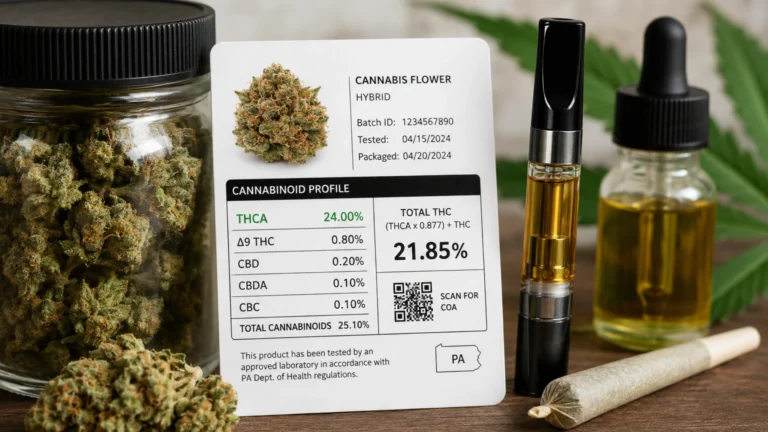
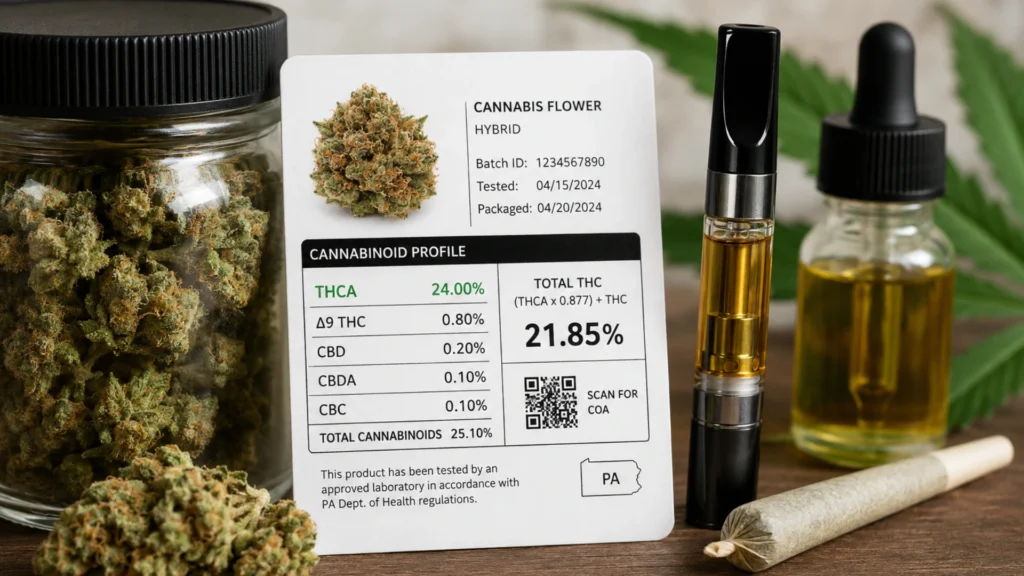
Example Label:
- THCA: 24%
- THC: 0.8%
- Listed “Total THC”: (sometimes not shown)
At first glance, it looks like THC is low, but that’s not the full story.
Step 1: Focus on THCA (This is where potency really lives)
Most flowers are made up mostly of THCA, not THC. That means the “strength” is mostly still in its inactive form until it’s heated.
So in this example, the real potency is coming from that 24% THCA.
Step 2: Convert it to actual THC potential
Use the standard formula:
Total THC = (THCA × 0.877) + THC
Now apply it:
- (24 × 0.877) = 21.05
- THC = 0.8
- Total THC ≈ 21.85%
The conversion of THCA to THC occurs through a process called decarboxylation, where heat removes a carboxyl group and activates the compound.This relationship between thca vs thc percentage and potency is supported by research on cannabinoid chemistry published by the the National Center for Biotechnology Information (NCBI).
What that actually means in the real world
That 24% THCA flower does not equal 24% active THC, it converts to about ~22% total THC once heated and consumed.
So when you’re comparing products at the dispensary:
- Don’t compare THCA alone
- Don’t compare THC alone
- Compare Total THC (or calculate it yourself)
Step 3: Use this quick rule while shopping
If you remember nothing else in the dispensary, use this:
- THCA = potential strength
- THC = already active (small part of the picture)
- Total THC = what you should actually compare between products
Step 4: What this helps you avoid
Understanding this prevents common mistakes like:
- Thinking a “low THC” label means weak flower
- Overpaying for products that only look stronger on paper
- Choosing the wrong potency for your tolerance
Why Pennsylvania Patients Trust Ozark MMJ Cards
Navigating the world of medical cannabis shouldn’t feel lonely. We’ve built our service to provide a supportive bridge between your health needs and the legal pharmacy.
Personalized Medical Guidance
Our online doctor evaluation is designed as a genuine conversation. We don’t just check boxes; we ensure your questions about thca vs thc percentage are answered before you ever step foot in a dispensary.
A Modern Approach to Care
We pride ourselves on a simple process that respects your busy schedule. We’ve eliminated the stress of traditional clinics to focus on what matters: your relief.
- State Compliant: Our MMJ doctors are fully licensed in PA and experts in local regulations.
- Fast Approvals: We move you from your screen to the dispensary counter quickly.
- Knowledge First: We believe an educated patient is a healthy patient.
Reading Beyond the Potency
While the thca vs thc percentage is often the first thing patients look for, the label holds other vital clues. Look for the “Terpene Profile,” which dictates the aroma and the specific type of relief you’ll feel, whether it’s calming like Lavender (Linalool) or uplifting like Citrus (Limonene).
Also, always check for the “Packaged Date” and the “Expiration Date.” Freshness matters in cannabis just as much as it does in your grocery store.
Master Your Medicine with Confidence
Once you learn how to read thca vs thc percentage correctly, you stop guessing, and start picking products based on real, comparable strength.
If you’re getting certified or shopping in Pennsylvania dispensaries for the first time, this is exactly the kind of label knowledge that helps you avoid trial-and-error purchases and find the right product faster.
Frequently Asked Questions
Does a high THCA percentage mean the flower is stronger?
Generally, yes. Since THCA converts to THC when heated, a high thca vs thc percentage indicates a high potential for potency. However, the terpenes also play a massive role in how “strong” the effects feel to you personally.
Can I see the lab results before I buy?
Most Pennsylvania dispensaries can provide a Certificate of Analysis (COA) upon request. This document gives a full breakdown of the percentage, and confirms the product is free from heavy metals and pesticides.
Why is the THC percentage so low on my flower label?
In raw flower, the “active” THC is usually very low (often under 1%). This is because the plant produces THCA naturally. The high numbers you are looking for are usually found in the THCA column.
What is a good THCA percentage for beginners?
If you are new to cannabis, look for a more balanced percentage or a product with a lower THCA (around 10–15%) and a higher CBD content to ensure a more manageable experience.