What Is THCA vs THC?
Understanding what is thca vs thc is one of the most frequently asked questions among Pennsylvania patients who are new to medical cannabis. If you have been researching cannabinoids, you have probably come across both terms and wondered why they seem so similar yet produce entirely different effects. Learning how these distinct compounds work can make navigating Pennsylvania’s medical marijuana program much less overwhelming.
Although they come from the same cannabis plant, they are not chemically identical. According to the National Center for Complementary and Integrative Health (NCCIH), cannabis contains more than 100 cannabinoids that interact with the body’s endocannabinoid system in unique ways.
Understanding What Is THCA vs THC
When breaking down what is thca vs thc, it helps to look at the raw versus activated states of these molecules:
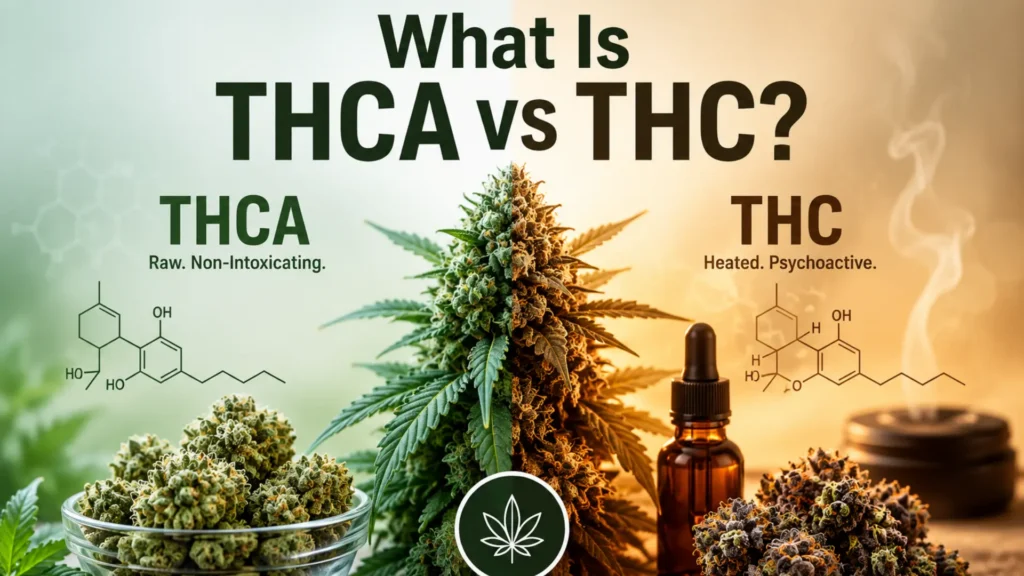
- THCA (Tetrahydrocannabinolic Acid): The naturally occurring cannabinoid found in fresh, unheated cannabis. In this raw form, it is non-intoxicating because its molecular structure prevents it from binding strongly to CB1 cannabinoid receptors in the brain.
- THC (Tetrahydrocannabinol): The activated compound responsible for the psychoactive effects commonly associated with cannabis use.
According to research published in the National Library of Medicine (PubMed), THCA acts as the acidic precursor to THC. It undergoes a thermal chemical conversion known as decarboxylation when exposed to heat through vaping, smoking, or cooking, which fundamentally alters its pharmacological profile.
Key Differences: THCA vs. THC
- THCA is found in raw, unheated cannabis and is non-intoxicating. THC is altered by heat (vaped, smoked) and is psychoactive.
- THCA is found in raw flower, topicals, and tinctures. THC is found in vapes, concentrates, and capsules.
Evaluating what is thca vs thc allows individuals to recognize these structural shifts and accurately interpret product packaging metrics at a licensed dispensary.
Why What Is THCA vs THC Matters on Dispensary Labels?
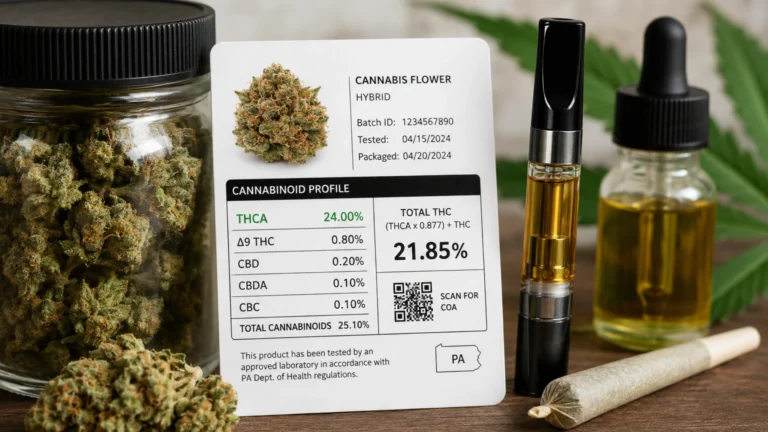
When buying medical cannabis flowers in Pennsylvania, product labels frequently detail both high THCA and low active THC percentages. This is because the raw plant material has not yet undergone heat activation.
Once a patient vaporizes that flower, the heat converts the raw THCA into active THC. Rather than guessing, patients who look into what is thca vs thc can confidently consult with dispensary pharmacists regarding appropriate chemical ratios, dosing metrics, and potential symptom management.
Common Medical Marijuana Products in PA
When considering what is thca vs thc for product selection, delivery methods vary tailored to different treatment plans:
- Flower: High in THCA (legally restricted to vaporization only under state law).
- Vape Cartridges & Concentrates: Highly concentrated forms typically featuring varying levels of both compounds.
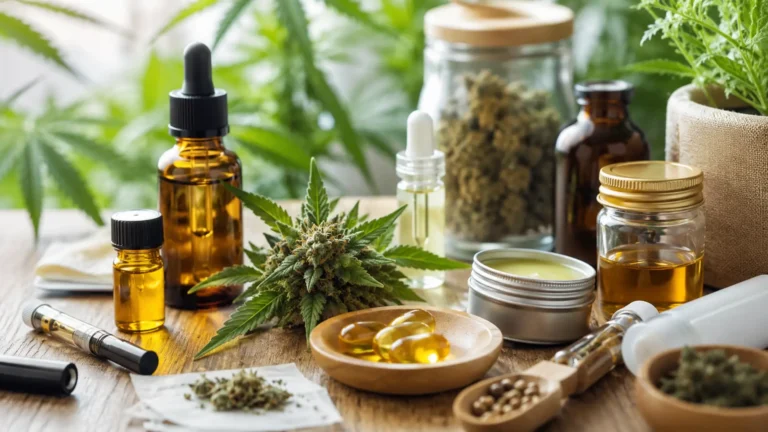
- Capsules, Tinctures, & Lozenges: Pre-activated options delivering systemic active THC directly.
How to Get a Medical Marijuana Card in Pennsylvania?
If reading about what is thca vs thc has clarified your treatment goals, securing a medical card in Pennsylvania is a straightforward, fully regulated process:
- Register: Create a profile on the Pennsylvania Medical Marijuana Registry portal to obtain a state ID number.
- Evaluate: Schedule a consultation with a state-approved physician to review your qualifying health history.
- Submit Fee: Pay the annual state-issued card fee ($50) via the state portal.
Platforms like Ozark MMJ Cards can make this journey simple by offering highly affordable, state-compliant online physician evaluations for first-time applicants and renewals. Patients frequently select Ozark MMJ Cards for their transparent pricing models, secure telehealth systems, and commitment to providing some of the lowest evaluation rates across the state.
For deep-dive regulatory steps, consult our comprehensive Pennsylvania Medical Marijuana Guide and Qualifying Conditions.
Final Review of Cannabinoid Profiles
Understanding how raw THCA transforms into active THC takes the guesswork out of reading Pennsylvania dispensary labels. Whether you need the non-intoxicating benefits of raw THCA or the full psychoactive potency of activated THC, recognizing these chemical differences empowers you to select the exact product formats, ratios, and consumption methods best aligned with your individual medical needs.
Ready to put this knowledge into practice and shop state-tested products at a Pennsylvania dispensary?
Frequently Asked Questions
Will THCA show up on a drug test?
Yes. Standard drug tests check for THC metabolites in your system. Because THCA converts to active THC when heated (or breaks down into THC over time), consuming THCA flower, vapes, or concentrates will cause you to test positive for cannabis.
Is THCA legal in Pennsylvania?
In Pennsylvania, THCA derived from high-THC cannabis flower is strictly regulated and only legally available to registered medical marijuana patients at state-licensed dispensaries. While federally legal hemp-derived THCA products exist under the 2018 Farm Bill, PA state law limits legal possession and use of medical-grade cannabis products strictly to active cardholders.
Can I eat raw THCA flower to get medical benefits without getting high?
Yes. Eating raw cannabis flower or taking raw THCA tinctures does not produce a psychoactive high because the compound remains unheated. Patients often use raw THCA for its soothing, anti-inflammatory properties without experiencing mental impairment.
Why does raw PA medical flower say "Vaporization Only"?
Under Pennsylvania medical marijuana law, smoking cannabis (combustion via open flame) is illegal. Patients are required to vaporize flower using an approved device. Vaporization supplies enough heat to convert raw THCA into active THC while complying with state regulations.
Is THCA stronger than active THC?
No. THCA itself is completely non-intoxicating. However, once heated, 1 gram of THCA converts into roughly 0.877 grams of active THC, meaning high-THCA flower will produce potent psychoactive effects once vaporized.