Best Strains for PTSD: A Guide to Medical Marijuana Strains for Patients
Best strains for PTSD are often a topic of interest for Pennsylvania medical marijuana patients seeking educational information about cannabis options that may help support symptom management under the guidance of a licensed physician. While cannabis is not a cure for PTSD, some patients report improvements in sleep, anxiety, or stress-related symptoms. The right strain varies from person to person, making professional medical guidance essential.
If you’re considering medical marijuana in Pennsylvania, understanding different cannabis strains, their cannabinoid profiles, and their potential effects can help you have a more informed conversation with your certifying physician.
What Are the Best Cannabis Strains for PTSD?
The phrase “best strains for PTSD“ refers to cannabis varieties that patients and healthcare professionals commonly discuss when exploring medical marijuana as part of a broader treatment plan for post-traumatic stress disorder (PTSD). Since every patient responds differently to cannabinoids, there is no single strain that is considered the best for everyone.
PTSD can affect people in different ways, with symptoms that may include:
-
- Persistent anxiety
-
- Sleep disturbances
-
- Nightmares
-
- Hypervigilance
-
- Difficulty relaxing
-
- Stress-related mood changes
Medical cannabis products vary in their concentrations of THC, CBD, and naturally occurring compounds called terpenes, all of which may influence the overall experience. Finding an appropriate product often requires guidance from a qualified healthcare provider and may involve some trial and adjustment.
Cannabis Strains Commonly Discussed for PTSD
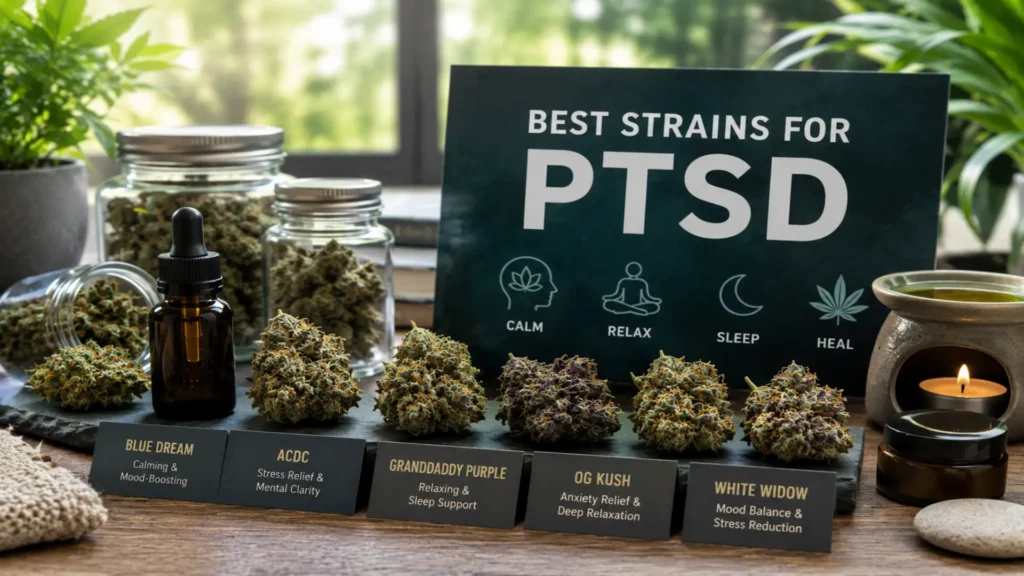
While research on specific cannabis strains remains limited, the following varieties are frequently discussed by medical marijuana patients and clinicians:Harlequin
Harlequin is known for its relatively high CBD content and balanced cannabinoid profile. Many patients interested in minimizing intoxicating effects while incorporating CBD into their treatment discussions ask about this strain.ACDC
ACDC is another CBD-dominant strain commonly discussed with healthcare providers. It is often considered by patients seeking a cannabis product that contains very little THC.Granddaddy Purple
Granddaddy Purple is an indica-dominant variety that patients often associate with evening use. It is frequently mentioned in conversations about relaxation before bedtime.Blue Drea
Blue Dream is one of the most widely recognized cannabis strains. Its balanced cannabinoid profile makes it a common topic of discussion for both daytime and afternoon use, depending on individual tolerance and physician guidance.Northern Lights
Northern Lights has been a popular strain among medical cannabis patients for many years. It is often discussed in relation to relaxation and nighttime routines.
Choosing the Right Strain for PTSD
The best cannabis strain for PTSD depends on your individual symptoms, treatment goals, medical history, and previous experience with cannabis. A healthcare provider who is knowledgeable about medical marijuana can help determine which cannabinoid profile and product formulation may be most appropriate for your needs.
It’s also important to remember that finding the best strains for PTSD does not mean cannabis is a cure for the condition. Medical marijuana should not replace evidence-based treatments such as psychotherapy or prescribed medications unless recommended by your treating physician. Where legal, medical cannabis may be considered as one part of a comprehensive treatment plan under appropriate medical supervision.
Who Qualifies for Medical Marijuana for PTSD in Pennsylvania?
Post-traumatic stress disorder (PTSD) is recognized as a qualifying medical condition under the Pennsylvania Medical Marijuana Program. Patients who have been diagnosed with PTSD may be eligible for medical marijuana after being evaluated by a physician who is registered with the state’s program.
PTSD is one of several conditions that may qualify a patient for medical marijuana in Pennsylvania. If you’re unsure whether your condition is eligible, see our full list of qualifying conditions to learn more about the state’s approved medical conditions.
To qualify, patients generally must:
-
- Be a Pennsylvania resident
-
- Have a diagnosis of PTSD or another qualifying medical condition
-
- Complete an evaluation with a physician registered with the Pennsylvania Medical Marijuana Program
If the physician determines that medical marijuana is appropriate, they can issue a certification that allows the patient to register with the Pennsylvania Medical Marijuana Program and obtain a medical marijuana ID card.
Learn More About Pennsylvania Eligibility
For the most current eligibility requirements, registration instructions, and program updates, visit the official Pennsylvania Department of Health Medical Marijuana Program.
Potential Benefits of Medical Marijuana for PTSD
Research on medical marijuana and PTSD is ongoing, and the evidence continues to evolve. While some patients report improvements in certain symptoms, individual responses to cannabis can vary significantly based on factors such as cannabinoid content, terpene profile, dosage, and overall health.
Patients exploring medical marijuana for PTSD often ask about the best strains for PTSD, as different cannabis products and cannabinoid profiles may produce different experiences. A qualified healthcare provider can help determine which cannabinoid profile and product formulation may be most appropriate based on your symptoms, medical history, and treatment goals.
Some patients report potential benefits such as:
-
- Improved sleep quality
-
- Reduced stress and anxiety
-
- Greater relaxation
-
- Better overall comfort and well-being
-
- Support for managing PTSD symptoms as part of a physician-directed treatment plan
While these experiences are commonly reported by patients, cannabis is not a cure for PTSD, and its effectiveness varies from person to person. Medical marijuana should be considered as one component of a comprehensive treatment plan that may also include psychotherapy, lifestyle changes, and other treatments recommended by your healthcare provider.
Learn More About PTSD and Medical Cannabis
For reliable, evidence-based information, visit these trusted resources:
If you’re considering medical marijuana for PTSD, speaking with a qualified physician can help you better understand the potential benefits, risks, and treatment options available for your individual needs.
Choosing the best strains for PTSD
Selecting the best strains for PTSD involves more than choosing a popular name.
Consider discussing these factors with your physician:
THC vs. CBD
Higher THC products may affect patients differently than CBD-rich options. Your physician can recommend an appropriate balance based on your goals and medical history.
Terpenes
Terpenes contribute to the aroma of cannabis and may influence the overall patient experience.
Common terpenes include:
-
- Myrcene
-
- Linalool
-
- Caryophyllene
-
- Limonene
Time of Day
Some patients prefer different products for daytime versus evening use depending on how the medication affects them.
Finding the best strains for PTSD often requires careful monitoring and ongoing communication with your healthcare provider.
How to Get a Pennsylvania Medical Marijuana Card
Pennsylvania allows both first-time certifications and renewals for eligible patients.
The general process includes:
-
- Register with the Pennsylvania Medical Marijuana Program.
-
- Schedule an evaluation with a registered physician.
-
- Receive certification if approved.
-
- Complete your state registration.
-
- Purchase products from a licensed Pennsylvania dispensary.
Start your evaluation by visiting our Medical Marijuana Card appointment page.
You can also learn more about qualifying conditions on our PTSD medical marijuana resource page.
For complete program information, review our Pennsylvania Medical Marijuana Program Guide.
Why Choose Ozark MMJ Cards for Your Pennsylvania Medical Marijuana Evaluation?
Ozark MMJ Cards makes the certification process straightforward for Pennsylvania patients seeking medical marijuana evaluations.
Patients appreciate our:
-
- Simple scheduling process
-
- State-compliant evaluations
-
- Fast approvals when appropriate
-
- Friendly patient support
-
- Educational guidance throughout the process
Whether you are applying for the first time or renewing your certification, our team helps patients understand every step while following Pennsylvania regulations.
If you’re researching the best strains for PTSD, our physicians can discuss available treatment options based on your medical history and current symptoms.
Take the Next Step Toward Medical Marijuana Certification
Finding the best strains for PTSD is a personalized process that depends on your symptoms, treatment goals, and physician guidance. Pennsylvania’s Medical Marijuana Program gives eligible patients access to regulated cannabis products while encouraging ongoing medical supervision.
If you believe medical marijuana may be appropriate for your condition, schedule an evaluation with a licensed physician and continue working with your healthcare team to determine the treatment approach that best supports your overall health and well-being.
Frequently Asked Questions About Medical Marijuana for PTSD
What are the best strains for PTSD?
The best strains for PTSD vary by individual. Factors such as THC, CBD, terpene profile, and personal tolerance all play a role. A licensed physician can help determine appropriate options.
Can I apply online for a Pennsylvania medical marijuana evaluation?
Yes. Pennsylvania patients can complete an online physician evaluation through approved providers, making the certification process convenient.
Does PTSD qualify for medical marijuana in Pennsylvania?
Yes. PTSD is one of Pennsylvania’s qualifying medical conditions for the Medical Marijuana Program, subject to physician evaluation.
Do I need medical records?
Medical records can be helpful, but requirements vary depending on your evaluation. Your physician will explain what documentation may be needed.
How long does it take to get a medical marijuana card?
Processing times vary. After physician certification and state registration, the Pennsylvania Department of Health issues medical marijuana identification cards according to its processing schedule.
Can a physician recommend specific strains?
Physicians can discuss treatment considerations and cannabinoid profiles. Dispensary pharmacists also help patients understand available products that align with physician recommendations.