Strongest Strain of Weed: What Makes a Strain So Potent?
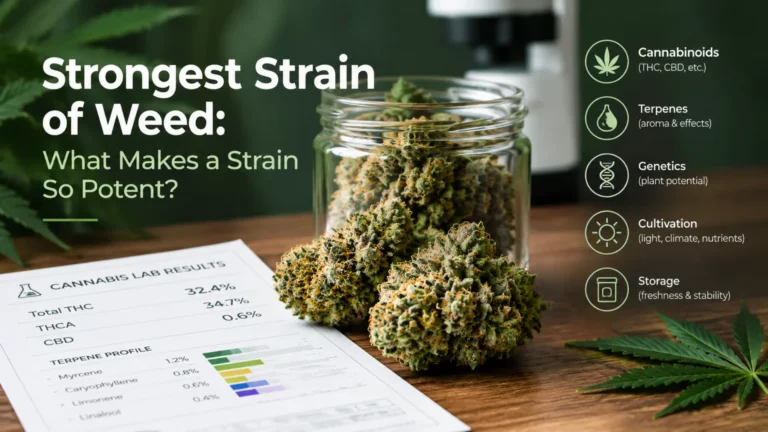
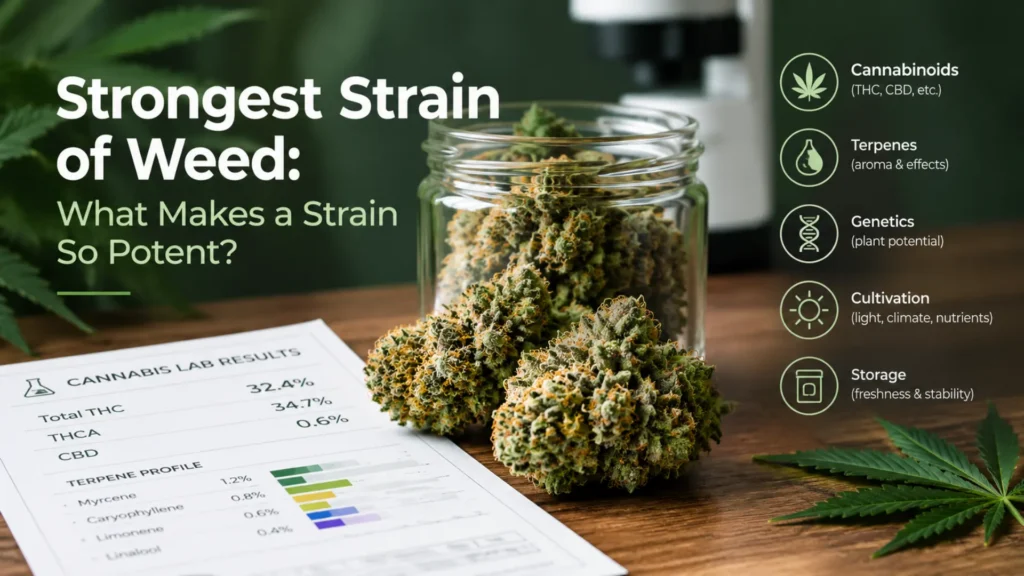
The strongest strain of weed is not necessarily the one with the highest THC percentage. Cannabis potency depends on cannabinoid concentration, plant genetics, growing conditions, product quality, and how an individual responds to THC. Some flower cultivars test above 30% total THC potential, but laboratory results and effects can vary between batches.
For medical marijuana patients, knowing what makes cannabis potent can help when comparing products at a licensed dispensary. THC content is an important starting point, but it does not tell the entire story. Terpenes, other cannabinoids, dosage, and individual tolerance can all influence the experience.
This guide explains what determines cannabis potency, which well-known strains are associated with high THC levels, and how to evaluate products more carefully.
What Determines the Strongest Strain of Weed?
THC, or delta-9-tetrahydrocannabinol, is the primary intoxicating cannabinoid in cannabis. It interacts with the body’s endocannabinoid system and can affect memory, coordination, perception, mood, and reaction time.
Cannabis flower also contains THCA (tetrahydrocannabinolic acid), a precursor that converts into THC when exposed to heat. This process is called decarboxylation. Because of this conversion, dispensary labels may report THCA, delta-9 THC, and total THC differently.
Several factors influence a strain’s potency:
- THC concentration: Higher THC content generally means greater intoxicating potential, although the amount consumed also matters.
- Cannabinoid composition: CBD and minor cannabinoids contribute to a product’s chemical profile, but their effects depend on the compounds and concentrations involved.
- Trichome production: These tiny, resin-producing structures on cannabis flowers contain many of the plant’s cannabinoids and terpenes.
- Individual tolerance: Someone who uses cannabis frequently may respond differently from a person with little or no prior experience.
According to the Centers for Disease Control and Prevention (CDC), cannabis effects vary with THC concentration, frequency of use, and other individual factors. Therefore, the highest laboratory number does not guarantee the strongest perceived experience for every person.
How to Identify the Strongest Strain of Weed on a Lab Report
A cannabis label can provide useful information, but patients should understand what the numbers mean before comparing products. Pinpointing the strongest strain of weed requires looking closely at THC percentage, which indicates the proportion of the product represented by the reported THC measurement. A flower sample labeled at 25% total THC has a different cannabinoid concentration from one labeled at 15%, but the difference in percentage does not translate directly into an identical difference in perceived effects.
Look for these details when reviewing a product’s laboratory report:
- Total THC: Helps compare the product’s potential intoxicating strength.
- THCA and delta-9 THC: Show the amounts of the precursor and already-present THC, depending on the reporting method.
- Terpene profile: Identifies measured aromatic compounds that contribute to the product’s scent and chemical composition.
- Testing date and batch number: Help confirm that the results correspond to the product being purchased.
- Contaminant screening: May report testing for pesticides, heavy metals, microbial contaminants, and residual solvents, depending on the product and applicable state requirements.
Lab results can differ between batches of the same named cultivar. For this reason, a cultivar’s reputation as the strongest strain of weed should not replace the specific batch test results on the label.
Popular High-THC Cannabis Strains
Several established cultivars are commonly associated with high THC concentrations and frequently compete for the title of the strongest strain of weed. However, no single option can reliably hold that label across every market because genetics, cultivation methods, testing standards, and individual batches vary significantly.
- Godfather OG: This indica-dominant cultivar is frequently marketed as a particularly potent option. Reported THC percentages vary, so its reputation should not be treated as a guaranteed laboratory result.
- Gorilla Glue #4 (GG4): Also known as Original Glue, this hybrid is recognized for its pungent, earthy aroma and resin production. Individual batches can differ considerably in cannabinoid content.
- Strawberry Banana: Known for its fruity aroma, this hybrid is often associated with high THC potential. Actual potency depends on the specific plant genetics and growing conditions.
- Chemdawg: This well-known cultivar is associated with a sharp, fuel-like aroma and a strong reputation among experienced cannabis consumers. Its chemical profile can vary between growers and batches.
These examples offer a realistic starting point rather than a definitive ranking. A product’s current certificate of analysis provides far more reliable guidance than simply relying on cultivar names to identify the strongest strain of weed.
Do Terpenes Make Cannabis Feel Stronger?
Terpenes are aromatic compounds found in cannabis and many other plants. They contribute to familiar scents such as citrus, pine, pepper, and lavender. Cannabis products can contain different combinations of these compounds, creating distinct aroma and flavor profiles.
Common cannabis terpenes include:
- Myrcene: Often associated with earthy, musky aromas.
- Limonene: Has a citrus-like scent.
- Beta-caryophyllene: Commonly described as peppery or spicy.
- Linalool: Associated with floral and lavender-like aromas.
Researchers continue to investigate how terpenes interact with cannabinoids and whether they meaningfully change cannabis’s effects in humans. The proposed entourage effect describes the idea that cannabis compounds may work together, but the extent and clinical significance of these interactions remain uncertain. A laboratory study published in the journal Cannabis and Cannabinoid Research found no convincing evidence that the tested terpenes directly enhanced THC activity at cannabinoid receptors (read the study).
Consequently, while terpenes shape aroma and experience, relying on scent alone will not reveal the strongest strain of weed. A strong bouquet or a high terpene percentage should never be automatically interpreted as greater THC potency or a predictable medical benefit.
How Genetics, Cultivation, and Storage Affect Potency
Cannabis genetics influence a plant’s potential cannabinoid production, but genetics alone do not determine the final laboratory result. Growing conditions, harvesting practices, drying, curing, and storage can all affect the finished product. These factors help explain why the strongest strain of weed may produce different THC levels depending on how it is grown and handled.
Growers manage lighting, temperature, humidity, nutrients, and plant health to support consistent development. Harvest timing and post-harvest handling also influence the final chemical profile.
After harvest, exposure to heat, oxygen, and light can contribute to changes in cannabis compounds over time. Poor storage may also affect aroma, freshness, and overall product quality. Keeping cannabis in a properly sealed container in a cool, dark place helps limit unnecessary exposure to these conditions.
A strain advertised at an exceptionally high THC percentage may not deliver the same results in every batch. Reviewing recent testing information is more useful than relying on cultivation claims alone.
Is the Strongest Weed the Best Choice for Medical Marijuana Patients?
Not necessarily. While pursuing the strongest strain of weed often leads patients toward high THC numbers, higher potency does not automatically guarantee better symptom relief. A high THC concentration can produce stronger intoxicating effects, but optimal therapeutic results depend on targeting the individual condition rather than maximizing intoxication.
Medical marijuana patients may have different goals, tolerances, and responses to cannabis. Some may be sensitive to THC and experience unwanted effects such as anxiety, dizziness, confusion, or a racing heartbeat. Others may need to consider how cannabis could interact with their medications or affect an existing health condition.
The CDC notes that highly concentrated THC products are associated with more severe cannabis use disorder symptoms. Cannabis can also impair attention, coordination, judgment, and reaction time (CDC health information).
Patients should consider their treatment goals, the complete product label, and guidance from an appropriately qualified healthcare professional rather than choosing a product based on THC percentage alone.
How Ozark MMJ Cards Can Help
Ozark MMJ Cards helps eligible patients pursue medical marijuana certification through physician evaluations in the states it serves. Patients can review the certification process, state-specific requirements, and available appointment options before deciding on their next steps.
If you are considering medical marijuana for a qualifying condition, a medical marijuana doctor evaluation can help determine whether you meet your state’s program requirements. Certification does not guarantee that a particular cannabis product will be appropriate for your needs, and product selection should take your individual circumstances into account.
Visit Ozark MMJ Cards to learn more about medical marijuana evaluations and the certification process in your state.
Tips for Evaluating High-Potency Cannabis Responsibly
If you are comparing products described as the strongest strain of weed, keep these practical considerations in mind:
- Start with your tolerance. If you are inexperienced or sensitive to THC, avoid assuming that a high-potency product is a better option.
- Check the current lab report. Confirm cannabinoid concentrations, batch information, and available contaminant-testing results.
- Avoid taking more too quickly. Inhaled cannabis and edible products have different onset times. Edibles may take 30 minutes to two hours to produce noticeable effects, and their effects can last longer than expected.
- Do not drive while impaired. THC can affect coordination, decision-making, and reaction time.
- Speak with a healthcare professional. Discuss potential benefits, side effects, medication interactions, and appropriate use for your circumstances.
For additional information, review the CDC’s cannabis health guidance and your state’s official medical marijuana program resources.
What to Know Before Choosing a High-THC Strain
The strongest strain of weed is not defined by a single THC percentage or a famous cultivar name. Cannabinoid concentration, genetics, growing conditions, product quality, and individual tolerance all influence how cannabis may affect a person.
High-THC strains such as Godfather OG, GG4, Strawberry Banana, and Chemdawg have established reputations, but their actual potency varies between batches. Reviewing laboratory results and considering your individual health needs are more reliable approaches than choosing a product based solely on its THC percentage.
For medical marijuana patients, the priority should be making informed decisions based on verified product information, state regulations, and qualified medical guidance. Higher THC does not automatically mean better results, so understanding potency and individual tolerance is essential when evaluating cannabis products.
Frequently Asked Questions
What is officially considered the strongest strain of weed?
No single cultivar holds the permanent title because potency fluctuates from crop to crop. While options like Godfather OG, Gorilla Glue #4 (GG4), and Chemdawg frequently produce batches testing above 30% THC, the true strongest strain of weed in any dispensary comes down to verified batch-level lab results, trichome density, and proper curing rather than a cultivar’s marketing name alone.
Does the highest THC percentage always mean the strongest strain of weed?
Not necessarily. A higher THC percentage indicates a higher concentration of intoxicating cannabinoids by weight, but perceived potency is shaped by your individual tolerance, consumption method, and overall cannabinoid profile. Simply buying the product with the highest lab number does not guarantee you have the strongest strain of weed for your personal physiological response or therapeutic needs.
Do terpenes increase the potency of high-THC cannabis?
Terpenes provide aroma and flavor, but current scientific evidence does not show that they directly increase THC’s potency at cannabinoid receptors. While they may influence sensory perception and subjective experience, a pungent aroma does not translate to higher intoxication levels.
Is high-potency cannabis recommended for medical marijuana patients?
Higher potency does not automatically mean better symptom management. In many cases, very high THC concentrations can trigger adverse effects such as anxiety, dizziness, rapid heart rate, or heightened tolerance. Medical patients often achieve better symptom control by balancing THC with CBD or minor cannabinoids under the guidance of a certifying physician.
How does THCA differ from total THC on a dispensary label?
THCA is the non-intoxicating acid precursor found in raw cannabis flower. When exposed to heat during smoking, vaping, or cooking, THCA converts into intoxicating delta-9 THC through decarboxylation.. Dispensary labels calculate total potential THC using a standard formula that accounts for this heat-activated conversion.